
The challenge is not ability. It is friction.
Neurodivergent professionals already drive some of the most creative and technical work today. They see patterns others miss, think quickly, and bring originality to complex problems.
What slows them down is not lack of ability, but friction.
The modern workplace still follows a neurotypical rhythm, with long meetings, multitasking, rigid systems, and constant context switching. For people who think differently, those routines can drain energy fast.
Personal knowledge management, or PKM, offers a different approach. It helps people design systems that match how their brains work instead of forcing them to fit into systems that do not.
What PKM really means at work
Most organizations already use knowledge management systems to store and share information across teams. Personal knowledge management takes that same concept and applies it at the individual level, focusing less on documentation and more on sense-making.
PKM is a way to collect, organize, and connect your ideas, notes, and learnings over time. It keeps important information close at hand and turns insights into usable knowledge.
Some people see it as a “second brain.” Others use it as a way to bring clarity and calm to the constant movement of modern work. It can be as simple as a folder of daily notes or as complex as a system like Notion or Obsidian.
At its best, PKM helps reduce cognitive load. It turns thoughts and ideas into tangible, trackable actions that feel less overwhelming, something that can be especially helpful for people who live with ADHD, autism, PTSD, or executive dysfunction.
Why PKM fits neurodivergent thinking
PKM works especially well for neurodivergent people because it mirrors how their minds already operate: fast, associative, and full of creative connections that do not always follow a straight line.
It can also support emotional regulation and provide a sense of continuity when memory or focus is inconsistent.
Recent research reinforces this. A 2023 study on designing personal knowledge management systems for people with ADHD found that voice-to-task automation, adaptive to-do structures, and flexible categorization significantly reduced cognitive overload by aligning with users’ natural thought flow. The research emphasized that low-friction, adaptive systems that make it easy to capture and act on ideas quickly help neurodivergent users stay engaged without becoming overwhelmed.
One Reddit user in r/adhdwomen described how building a Notion-based PKM system helped them manage both cognitive and emotional load:
“It’s helped me a ton in managing my anxiety around tasks, appointments, and just general daily management, as I’m not obsessing over the mountains of things to do in my head at all times… The tasks will linger if I miss them in a day, or if there’s a chain of tasks to complete that are done in order, only the first will show to minimize overwhelm. I break down almost everything I want to do into tasks I can finish in a session. It’s very forgiving.”
Commenter, r/adhdwomen
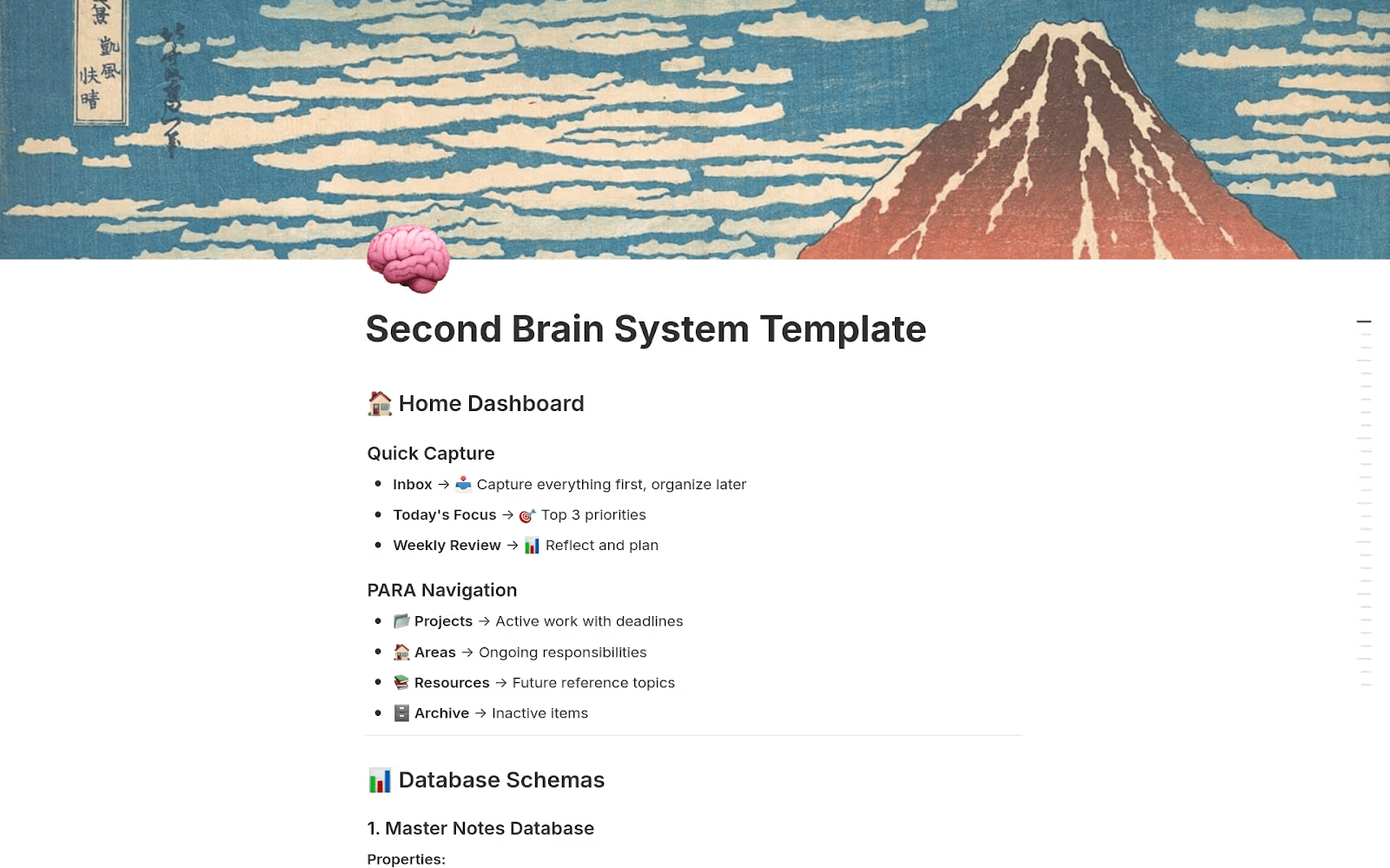
Example of a PKM template for Notion. Source
That idea of forgiveness, where systems adapt to changes in energy and focus instead of punishing lapses, comes up often in neurodivergent communities. A good PKM setup works with your rhythms, not against them.
For others, PKM takes on an even more profound purpose. One Redditor, a brain injury survivor, explained how their PKM became a way to retain identity and memory:
“PKM for me is essentially PKR (personal knowledge retention). After years of obviously existing and doing things, I wish I had at least some recall of that, even the day-to-day things. I finally made significant progress when I found Obsidian last year… Those things like daily notes, tasks, projects, and habit tracking are the scaffolding upon which we build our lives. Those bits become more valuable as we accumulate more of them because they give perspective on patterns, trends, and connections that are inobvious when viewed individually.”
Commenter, r/PKMS
Their story captures a powerful truth: PKM is not just about getting more done. It’s about creating a record of thought and experience that can help people reconnect with themselves, even after moments of loss or burnout.
For neurodivergent users especially, PKM can become a quiet companion that holds their thinking, creativity, and emotions in one safe place, ready to be revisited when the world feels too fast.
When PKM doesn’t help (and what to learn from it)
Not everyone finds PKM transformative. Common frustrations appear again and again.
Overbuilding the system. People often spend more time designing their setup than using it.
Information clutter. PKM systems can become digital “idea hoards” filled with half-finished notes.
Maintenance fatigue. Even the best system can feel heavy during periods of low focus or burnout.
Some creators have gone further, questioning the entire idea of personal knowledge management itself.
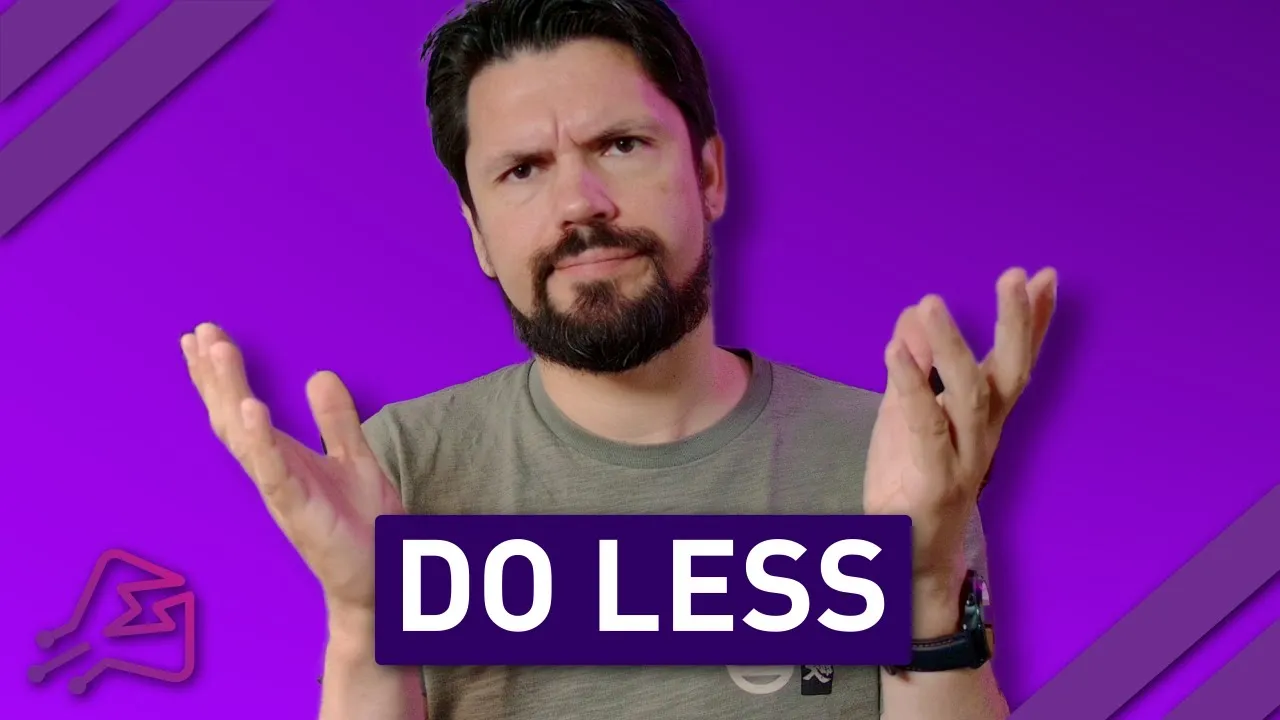
Watch: Bas Grolleman’s “Personal Knowledge Management is Stupid” on the Tools on Tech YouTube channel explores why overbuilding systems can backfire.
In the video, Grolleman explains that many people spend hours maintaining “perfect little notes for our own satisfaction,” only to find that when they actually need information, those notes rarely deliver.
Grolleman compares note-taking to advertising:
“Half the money I spend on advertising is wasted, and the trouble is, I don’t know which half. Note-taking often feels the same way. Half the notes you make are wasted, but you don’t know which half.”
He suggests that the obsession with capturing everything leads to diminishing returns:
“We end up creating a vast desert of knowledge with occasional rocks of insight. But because we’re so busy exploring that desert, we don’t have the time to look up and see the mountain in the distance.”
His argument is not against taking notes, but against doing it mindlessly. His conclusion is simple:
“You don’t need a copy of the internet. What you need are your personal thoughts and ideas, and fewer of them.”
That critique mirrors what many neurodivergent users describe when their PKM systems become too complex. What begins as a helpful structure can quickly turn into a source of pressure. The emotional weight of keeping up can outweigh the value of the system itself.
The answer is not to give up on PKM, but to simplify it. A sustainable system should be light, flexible, and forgiving. It should help you think clearly without demanding constant attention.
When PKM is viewed in this way, as a tool for reflection rather than perfection, it becomes a genuine companion to real life instead of another layer of work.
From friction to flow
The growing conversation about neurodiversity at work is shifting from accommodation to design. The goal is no longer to make space for different ways of thinking, but to build systems flexible enough to support them all.
PKM embodies that mindset. It does not exist to fix attention, focus, or memory. It exists to shape the environment around them. When people can externalize their thoughts, create flexible structure, and see patterns emerge, they often find themselves working with greater clarity and confidence.
In this way, PKM becomes less about productivity and more about cognitive accessibility. It helps reduce friction so that energy goes toward insight, not self-management.
That same principle is shaping the rapid adoption of AI note-taking tools. The global market for AI note-taking tools is projected to grow from USD 535.9 million in 2024 to over USD 2.5 billion by 2033, reflecting the demand for smarter, more intuitive ways to manage information.
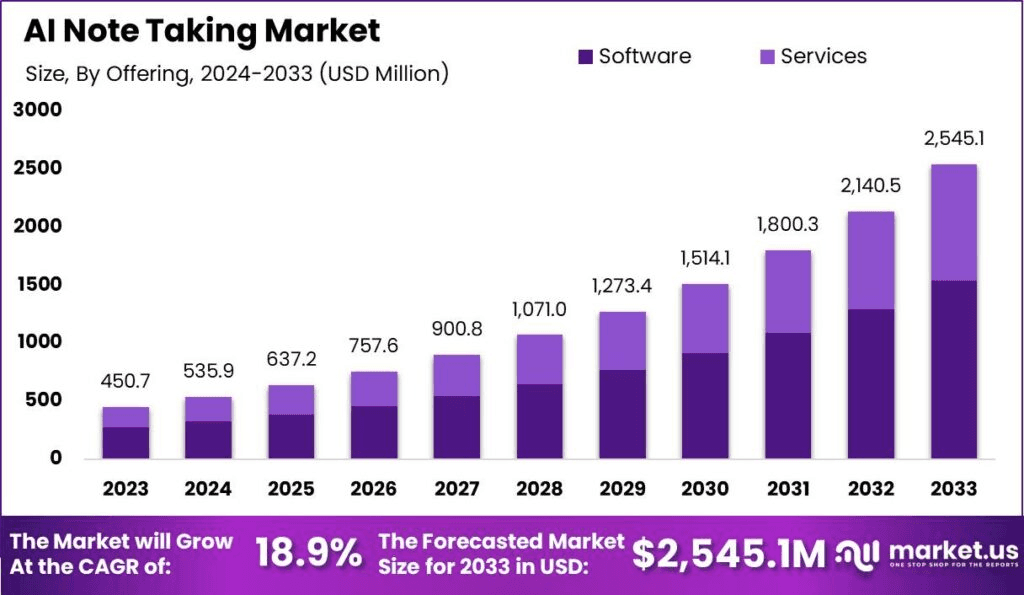
This growth signals a broader shift in knowledge work. People are no longer seeking to capture everything but to design tools that lighten mental load, preserve focus, and turn attention into action.
Tools like Radiant share that same philosophy. Rather than replacing human intelligence, they create space for it to thrive, transforming ideas and meetings into tangible progress.
One neurodivergent professional in the customer success space described it this way:
“It really is my catch-all for helping things not fall through the cracks. I can be chaotic and doing a lot at once, but Radiant keeps me on task. I can review my calls and to-dos, and catch if I never hit send on an email.”
That experience captures what cognitive accessibility truly feels like — not control, but confidence.
The future of work will not belong to those who collect the most information, but to those who create systems that make information manageable.
The future of work will not belong to those who collect the most information, but to those who create systems that make information manageable and usable.
Building systems that work for real people
PKM is most powerful when it feels personal and forgiving. The goal is not to build the most sophisticated setup, but the one you will actually use when your brain feels busy or tired.
Many people find success by following simple, structured frameworks like Tiago Forte’s PARA Method, or by building their own PKM around the way they naturally think. PARA stands for Projects, Areas, Resources, and Archives, four categories that capture every piece of information in your life. The method’s strength lies in its simplicity: instead of creating endless folders or tags, you organize information around what you are actively working on.
That focus on actionability makes PARA particularly valuable for neurodivergent users. It turns organization into a series of small, achievable decisions rather than an abstract, ongoing task.
Here are a few principles and some tools that can help you start small and grow over time.
Start small
Capture thoughts in one place. Complexity can come later.
If you are new to PKM, a simple note app like Apple Notes or Google Keep is enough to begin. Focus on capturing ideas as they happen, not on tagging or linking. The first habit to build is getting things out of your head.
Connect later
When you have focus, link ideas or summarize key takeaways.
Tools like Radiant can do that automatically after meetings, turning notes into action items or updates. If you want to go deeper into knowledge linking, apps like Obsidian offer networked thinking, perfect for visual or associative minds.
Review regularly
A short weekly review can reveal patterns and priorities.
Some people do this with a paper notebook or Notion dashboard; others prefer automation. Tools such as Mem or Reflect can resurface past notes automatically, helping you spot trends in your thinking without manual work.
Stay flexible
Whatever tools you choose, remember that you set the rules. PKM should serve your mind, not manage it.
Some professionals use a structured process to make that happen. One self-described neurospicy knowledge worker explains it as a three-part cycle: curation, note-making, and utilisation.
“All my actions are mapped with actions to consequences, so if I read something it should be worth my time. Then I follow this process.
Curation — the things I read and find interesting.
Note-making — my own thoughts on what I’ve read.
Utilisation — how I use it to improve my work and creativity.”
They use a mix of tools to support that flow: Sublime for curation, Logseq for notes, and Msty to put those ideas into practice. The specifics will vary for everyone, but the principle holds: the most effective systems are the ones that help you use what you know, not just store it.
Visual notes can also play a powerful role. Some people add images, screenshots, or references directly into their PKM tools to spark memory or bring abstract ideas to life. For example, a Notion page might combine meeting takeaways, creative prompts, and visual assets in one place to help connect thoughts and next steps.
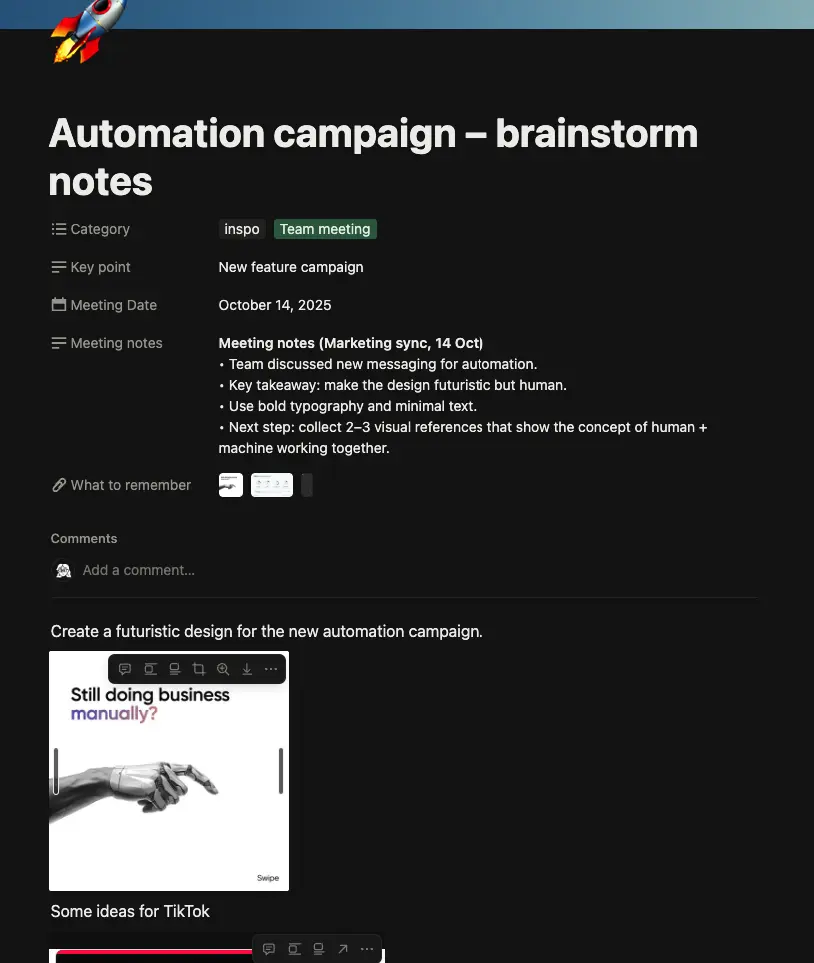
When your system is light enough to bend but strong enough to hold your thoughts steady, it becomes more than a productivity framework. It becomes a personal record of how you think, learn, and grow.
What better systems make possible
Neurodivergent professionals do not need fixing. They need tools and systems that help their natural strengths thrive.
Personal knowledge management is one of those tools. It turns fleeting thoughts into steady progress, helps ideas stay visible, and gives structure without pressure.
For many, PKM is more than a productivity method. It is a form of self-support, a way to feel grounded, confident, and capable in the chaos of modern work. When people have the right systems, they do not just manage information; they unlock their full potential.